

The Benefits of Crate Training
Crate training is one of the most valuable tools for both dogs and their owners. It supports healthy development, encourages independence, and promotes long-term confidence and good behavior.
Benefits for Puppies
Benefits for Owners
Security and Comfort: A consistent resting space provides peace of mind and encourages calmness.
Potty Training Aid: Puppies naturally avoid soiling their sleeping area. The crate helps establish clean habits and control.
Confidence and Calm: Gentle crate training reduces anxiety and helps dogs feel safe when left alone.
Ease of Travel: A crate-trained dog adapts more easily to car rides, veterinary visits, and new environments.
Safety: Prevents chewing or accidents when the puppy cannot be supervised.
Simplified Training: Creates a structure that supports housebreaking and good routines.
Peace of Mind: Owners know their puppy is safe, comfortable, and secure.
When used with consistency and patience, the crate becomes one of the most effective ways to build trust, structure, and lifelong comfort.
How We Begin Crate Training at Snuggly Schnauzers
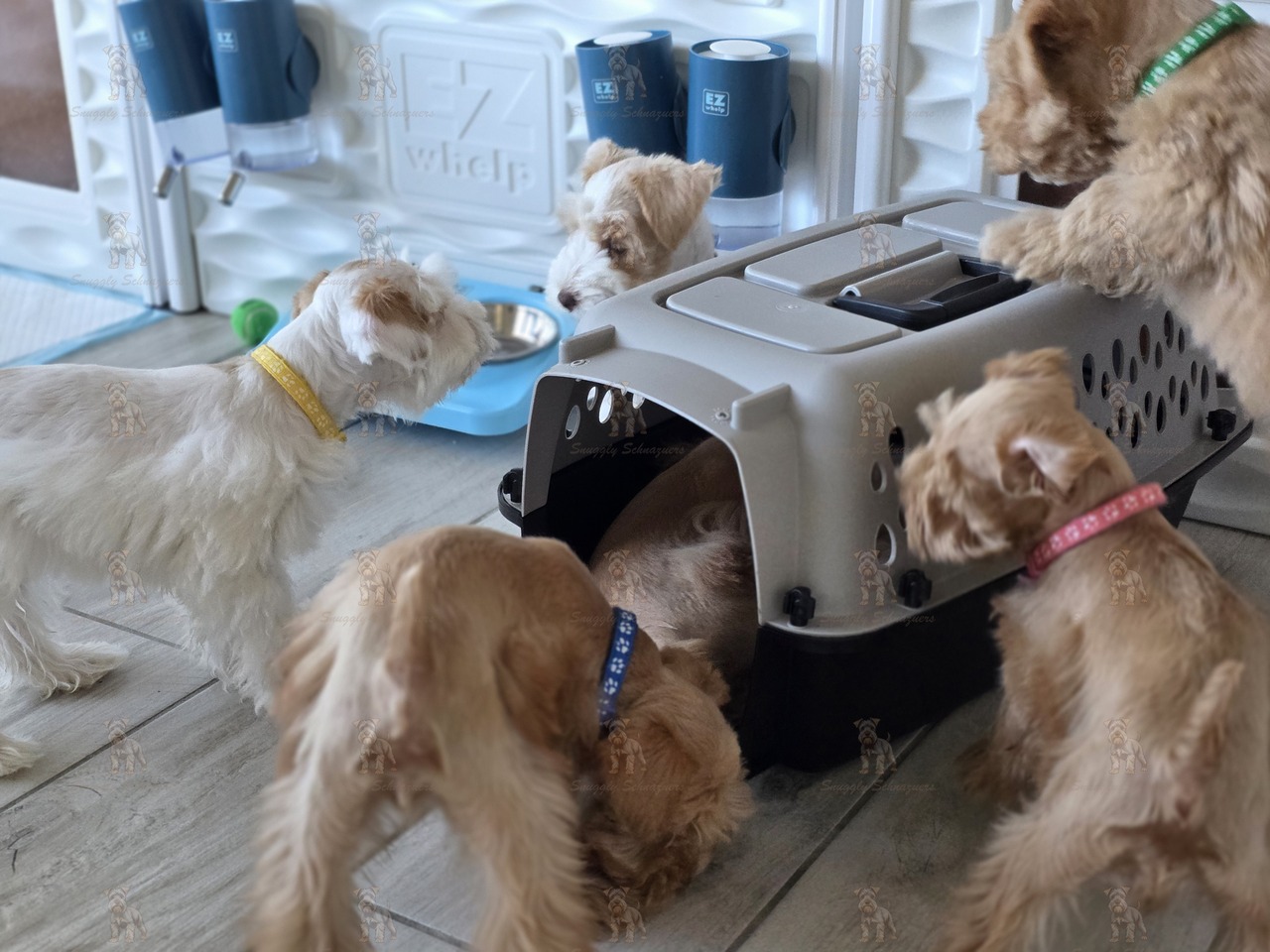
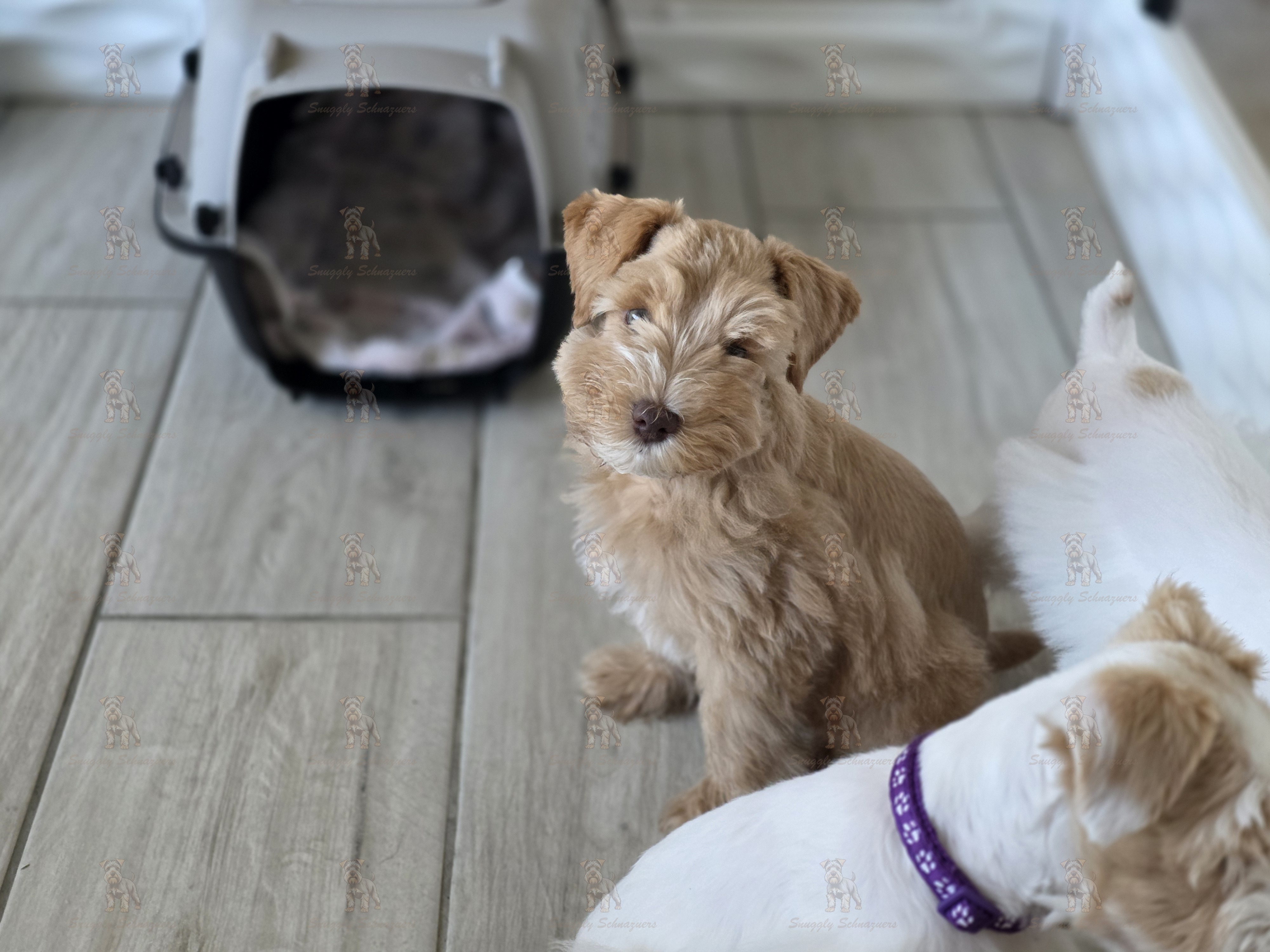
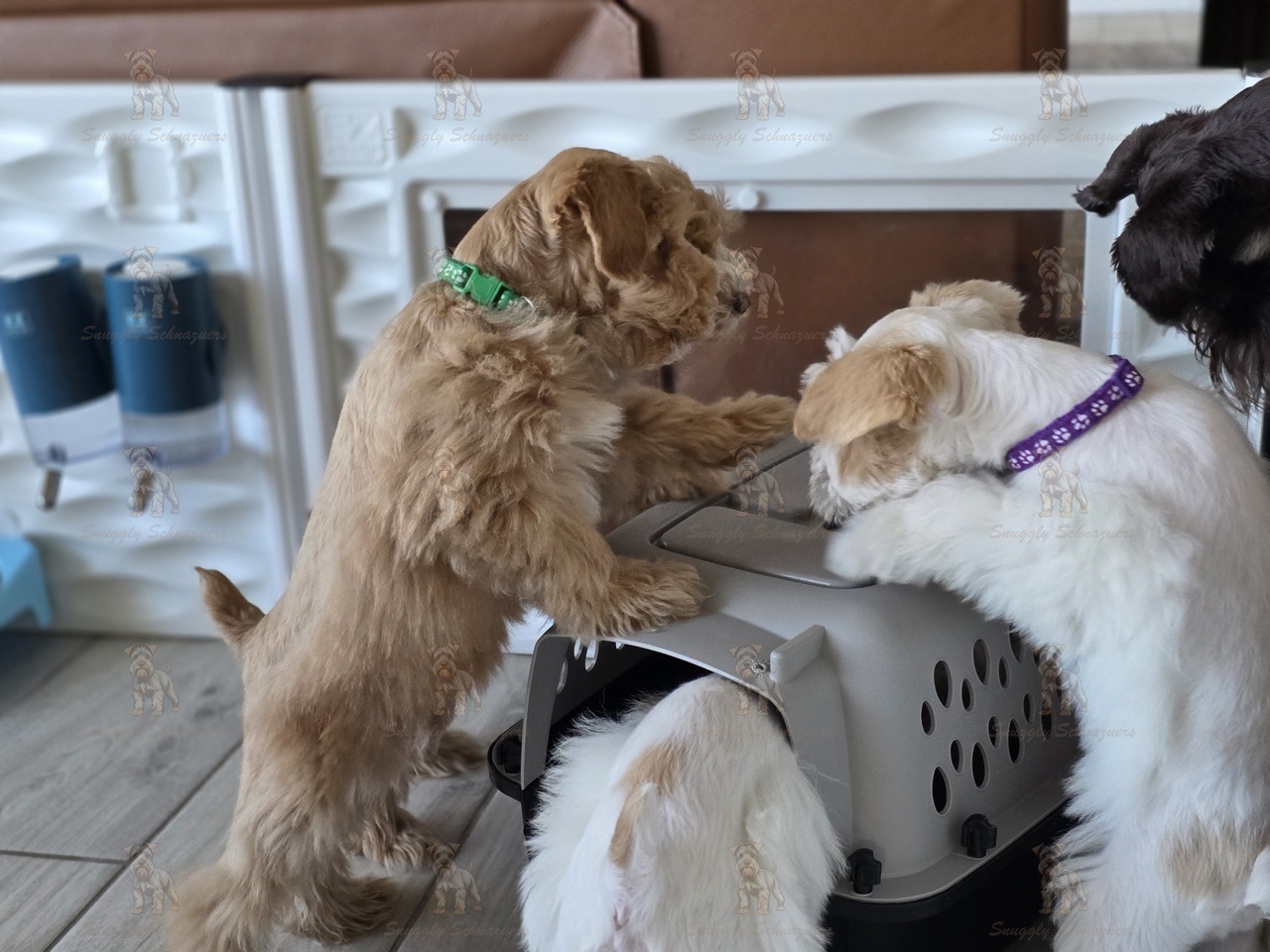
At Snuggly Schnauzers, we gently introduce our puppies to crates before they go home, giving them a head start toward smooth transitions. We begin by introducing a doorless crate for puppies to explore and come in and out of at their leisure before transitioning to short sessions in a closed crate. We use soft bedding, safe toys, and calm encouragement so each puppy learns that the crate is a place of rest and relaxation.
Crate sessions are short and positive, never forced or used for punishment. Puppies spend the majority of their time playing, exploring, and being held by our family, but they have brief, structured crate time to begin developing independence and healthy potty habits.
After their first set of immunizations, puppies also begin spending supervised time in a controlled outdoor space to associate potty breaks with the outdoors. By the time they join their new families, they already understand that the crate is a calm, safe environment — not something to fear and have a lot of experience with outdoor potty breaks.
How to Crate Train Your Puppy at Home
A thoughtful approach ensures crate training is positive and effective. These steps align with the principles outlined by Dr. Martin R. Smith and leading veterinary behaviorists.
Step 1: Choose the Right Crate
Select a crate large enough for your puppy to stand, turn, and lie down comfortably — but not large enough to use one end as a bathroom.
Step 2: Make the Crate Inviting
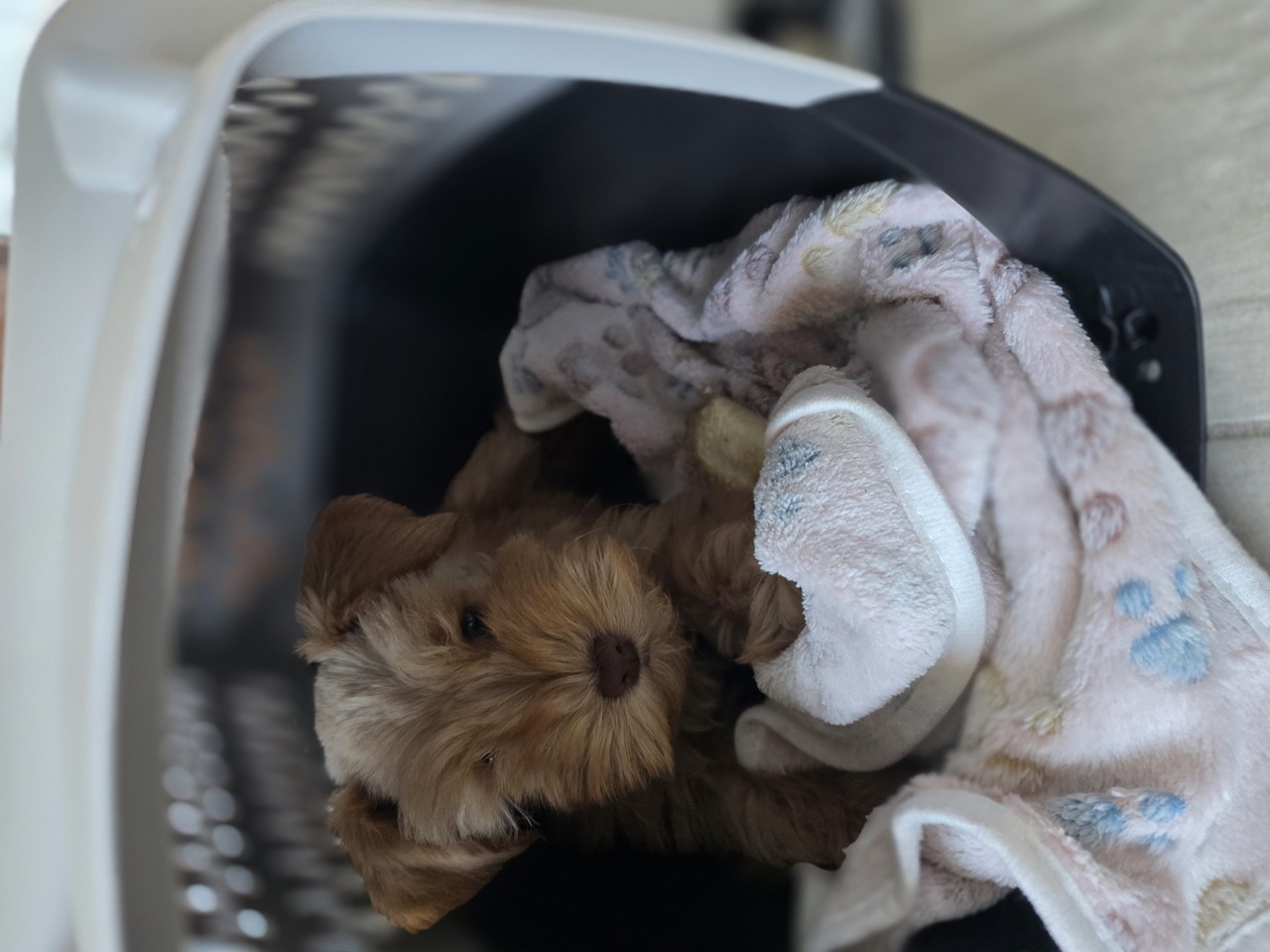
Add a soft blanket, a chew-safe toy, and place it in a quiet area where your puppy can rest but still see you. Feed a few meals in the crate to create positive associations.
Step 3: Introduce It Gradually
Begin with short, calm sessions. Leave the door open while your puppy explores, then close it briefly while you sit nearby. Gradually increase the time as your puppy relaxes.
Step 4: Use Positive Reinforcement
Reward quiet, calm behavior with praise or treats. Never scold or use the crate as punishment — it should always represent safety and comfort.
Step 5: Maintain a Consistent Routine
Take your puppy outside after naps, meals, and playtime and before and after crate time. Say a consistent cue like “Outside” before every potty break. A regular routine helps build good habits quickly.
Step 6: Be Patient and Gentle
Adjustment takes time. Stay calm, and avoid responding to whining unless it’s time for a potty break. Release your puppy only when they’re quiet so they learn that calm behavior earns freedom.
The Result
When crate training is introduced with patience and understanding, dogs learn to see their crate as a sanctuary — a quiet place to rest, feel secure, and recharge. It becomes a foundation for house training, confidence, and lifelong comfort, making the transition into your home smoother for both puppy and owner.
At Snuggly Schnauzers, we start this process early so your puppy comes home already familiar with their crate — setting the stage for a confident, well-adjusted companion.